was introduced to India during the twelfth century ADI personally think it would be difficult to argue that it appeared as an art in Egypt first. Evidence has been found that henna (Mehendi) was used to stain the fingers and toes of Pharoahs prior to mummification over 5000 years ago when it was also used as a cosmetic and for its healing power. The mummification process took 70 days and if the Egyptians were diligent in planning for their death and rebirth in the afterlife, they became quite obsessed with the preservation process. The Egyptians believed that body art care for the inclusion in the afterlife 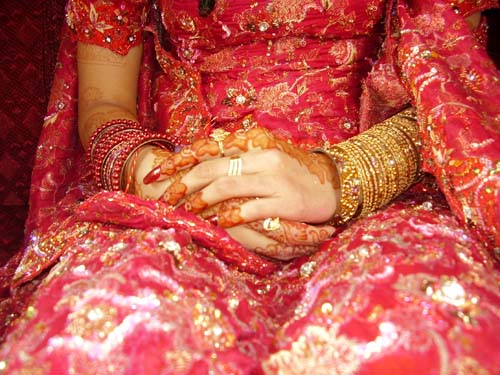 |
|
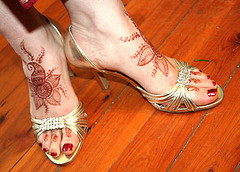
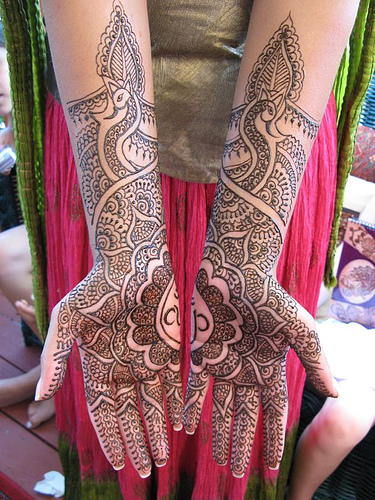
T The bush is also grown in Florida and California for his ornamental appearance and often grows to very large, ranging from six to twenty feet in some cases. The lance-shaped leaves of the bush are harvested, dried and ground to the henna powder. Henna is used for hair dyes, such as a skin conditioner and as a reliever for skin rash. The art of Mehendi is meant to Mehendi henna or depending on where you are and whatever name you feel came first. Whatever you call it - the art remains essentially the same as it was centuries ago. It is beautiful the way it stains the skin! Mehendi is not the huge commitment that tattooing is because of its temporary nature. For those too scared to endure the poking of a needle or too ambivalent to commit to wearing the same permanent design forever: - Mehendi is a wonderful alternative. I suggest that anyone who hesitate in getting a permanent tattoo: - try walking the streets with a henna design for a few weeks first. It helps you discover if you constantly look backward and whispers that you often hear when you are in the public as a decorated person. Henna also allows you to play with designs until you find that you are and then you get it permanently etched into your skin if you want. Some people like expensive, while others are much more comfortable with temporary forms of body art. Regardless of how you use henna to decorate your body, and the main idea is that nice.
All of these styles remain popular today but are also combined in popularity by Celtic designs and Chinese symbols. The point once again to have fun with designs and experiment with them until you have something you feel really passionate about. In India it is used in celebrations such as weddings and other special occasions which are traditionally associated with transcendence and transformation. It is used for worship and work, but not for the sake of vanity. It is traditional for the bride to join her friends and have hours applying the henna to her skin and give her marriage advice in tandem. The patterns used for weddings are much more complicated and time consuming (than the everyday wear) and it is the bride's friends have much time for her advice on erotic activities for her wedding night, sexual instructions and tips during the hours that it can to the design. The bride is henna must be more beautiful and complex than anyone else because of course it is her special day. Another interesting fact is that the bride has good reason to look after her henna for she is not expected to participate in the household until the henna is gone. This means that they will not be rubbing, scrubbing or tubbing a lot unless she really likes working at home.